

momentour
Whale season in Mexico
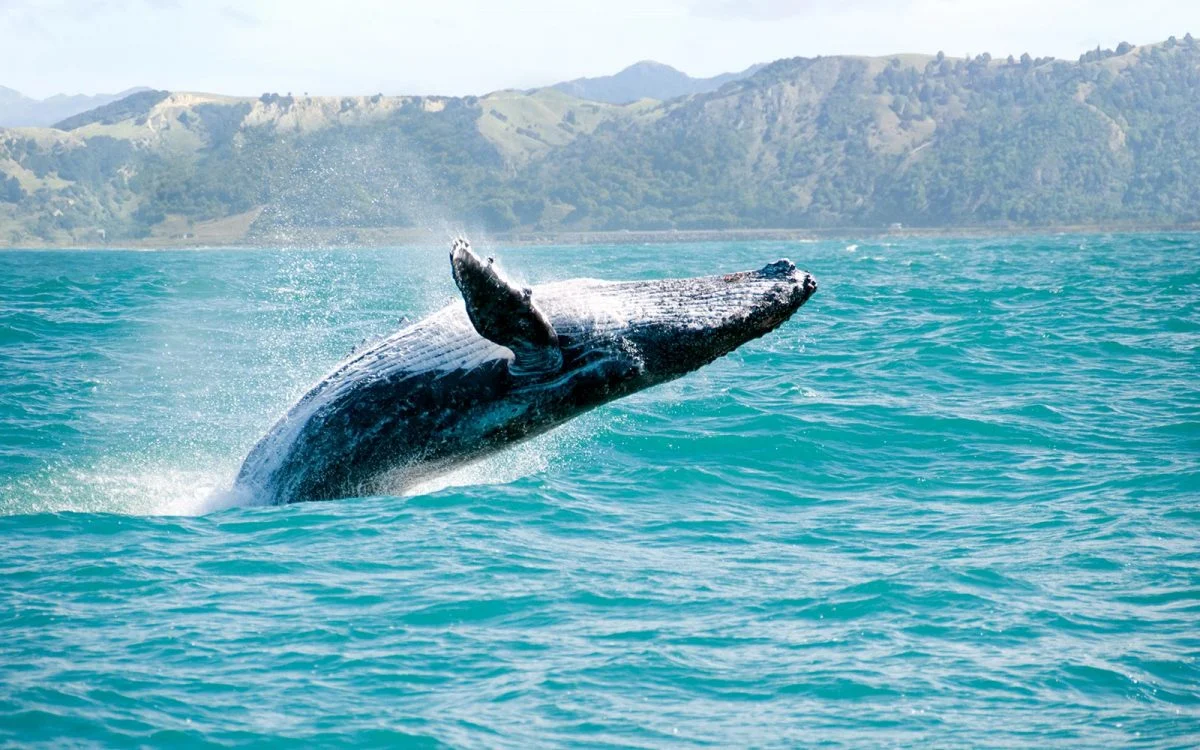
There’s a time each year when the ocean seems to slow down—then suddenly break its calm. A burst of breath on the horizon. A fin slicing the surface. A tail striking water with a sound that makes everything else fall quiet.
This is whale season in Mexico, when some of the largest animals on Earth return to the Pacific coast to mate, give birth, and guide their calves through their first weeks of life.
What’s happening?
Every winter, several whale species migrate thousands of miles from colder northern waters to Mexico’s warmer seas. They don’t pass through quickly—they arrive with purpose, staying long enough to complete a life cycle that has repeated for centuries.
For travelers, it turns Mexico into one of the world’s most compelling places to observe whales in the wild—close enough to feel intimate, but still governed by distance, respect, and chance.
When to go
December to April
With peak activity from January to March.
Exact timing varies by species and region, but in every case the season is limited—and that’s what makes it special. You’re witnessing something temporary, tied to migration and survival, not a permanent attraction.
Where to experience it

What it feels like out there
Whale season isn’t staged. There are no guarantees and no predictable performances. It’s patience, attention, and sudden astonishment.
Sometimes you’ll see only a distant spout. Other times a whale launches its full body out of the water. Each outing is different—and that uncertainty is part of the experience.
Tours are typically led by certified guides, with protocols designed to protect the animals and keep human impact low.
Why Mexico stands out
Few countries offer this range of species and settings. In Mexico, humpbacks, gray whales, and blue whales can all be seen within the same season—sometimes even in the same region—across environments that shift from sheltered lagoons to open ocean.
Mexico isn’t just a stop on the route. For these whales, it’s a temporary home.
Reglas de Oro
Tips for whale season
1.
Travel between January and March for the best chances of sightings.
2.
Choose certified, responsible operators with clear wildlife protocols.
3.
Bring sun protection, a hat, and layers—wind on the water can be cool even in warm regions.
4.
Keep it respectful: don’t touch, chase, or interfere.
A season you feel in your body
Seeing a whale in the wild changes the scale of everything—the trip, the sea, even your sense of self.
If you’re visiting Mexico in winter, leave room in your itinerary for the ocean. In that wide blue silence, you may find one of the most memorable encounters of your life.