

Highlight
Chichén Itzá: The Echo of the Stars
An Encounter With Mathematical Precision and Mayan Mysticism
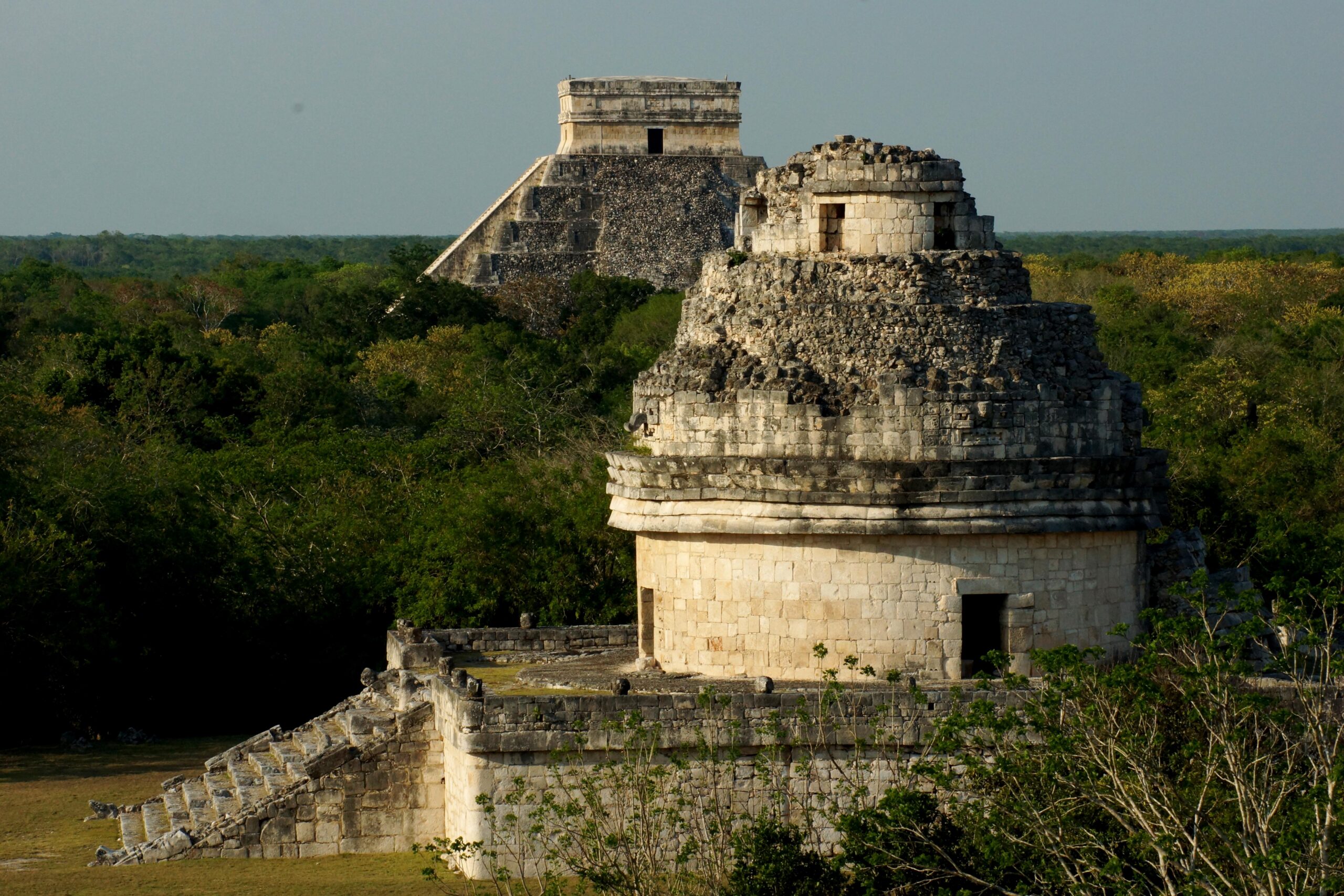
There is a precise instant, just as the morning sun bathes the limestone of El Castillo, when the murmur of the jungle seems to pause to give way to an ancestral presence. It is not merely the magnitude of the human achievement that captivates, but the certainty that every angle and every shadow was designed to dialogue with the universe. Here, the spectator does not just observe an archaeological structure; one becomes a witness to a millennial choreography where sunlight transforms into a descending divinity, connecting the earthly plane with the sacred.
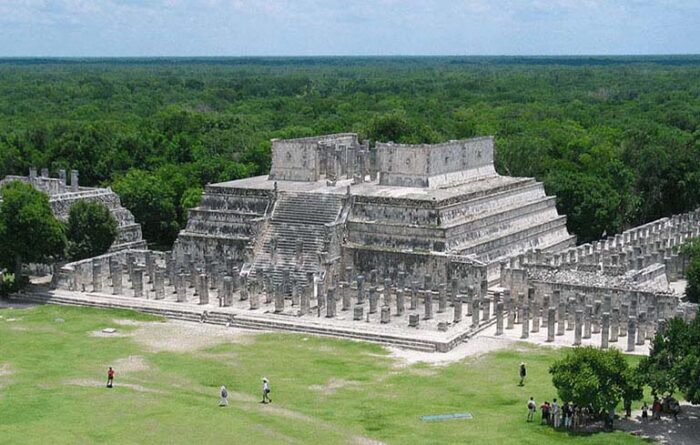
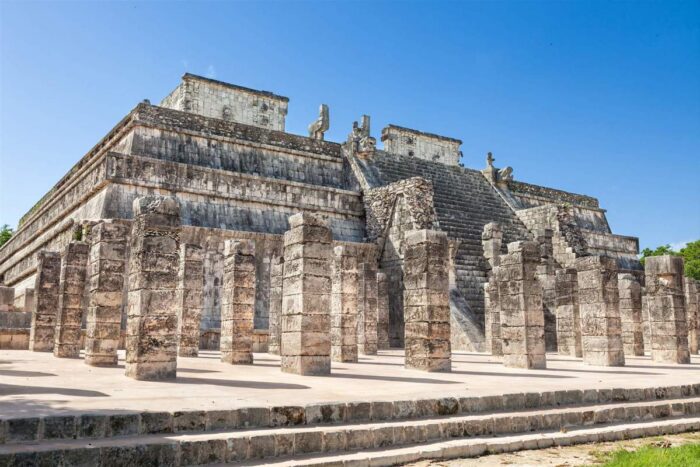
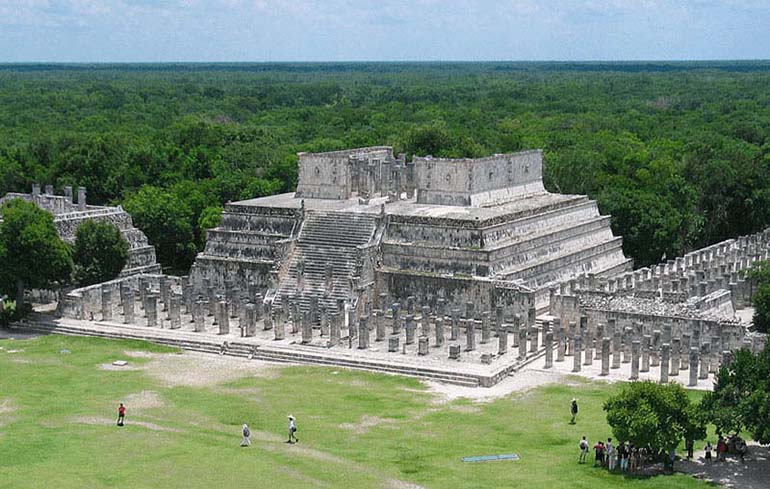
The experience of inhabiting Chichén Itzá begins long before reaching the base of the great pyramid. It manifests in the drop in temperature as you walk beneath the jungle canopy and in the scent of damp earth that anticipates the opening of the great esplanade. Standing before the Pyramid of Kukulcán, the traveler experiences a sense of absolute order. The true magic occurs while wandering through the Group of the Thousand Columns, where the rhythmic repetition of the pillars creates a play of perspectives that invites deep introspection.
Walking toward the Sacred Cenote is a transition into the sublime; the deep green of its waters and the verticality of its limestone walls evoke an immediate respect for the rituals of life and death that once took place there. It is a journey that alternates between admiration for human intellect at the Observatory (El Caracol) and the vibrant energy of the largest Ball Court in Mesoamerica, where sound bounces with a clarity that seems to carry the echoes of ancient glory. It is, in essence, a dance between intellectual curiosity and a profound spiritual connection with the roots of the Americas.
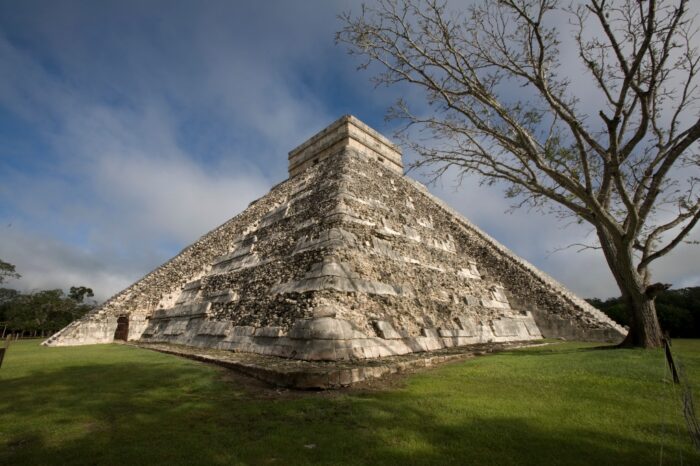

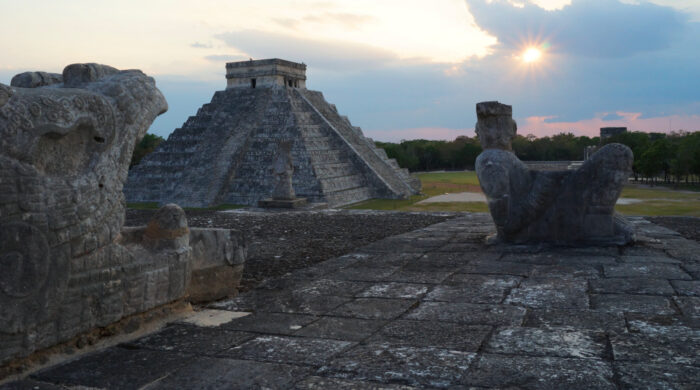

Chichén Itzá represents the pinnacle of Mayan thought and its capacity for cultural synthesis, particularly following the Toltec influence that enriched its architecture and worldview. Founded around the 6th century AD, this city was not only a ceremonial center but a political and economic powerhouse that dominated the Yucatán Peninsula. Its design is a marvel of archaeoastronomy: El Castillo functions as an exact chronological marker. Its 365 steps symbolize the days of the solar year, while its nine levels represent the strata of the Mayan underworld (Xibalbá).
The site’s acoustic sophistication is equally astonishing. The “chirp of the quetzal” phenomenon, produced by the ricochet of sound against the staircase, is not a coincidence but deliberate engineering that allowed rulers to communicate with the divine before the masses. Furthermore, the site houses the Tzompantli and the Temple of the Warriors, whose bas-relief carvings narrate chronicles of conquest and divine lineages, providing insight into the complex social structure of a civilization that, without metal tools or draft animals, achieved a geometric precision that continues to amaze modern engineering.
Trip X-Ray
Ideal Duration
A stay of 5 to 7 hours is recommended. The extent of the site and the depth of information require pauses for contemplation.
Traveler Tips
Exclusivity is found in preparation. We suggest employing guides specialized in archaeoastronomy or art history to transcend the basic tourist narrative.
Special Recommendations
Complement the visit with a stay at nearby haciendas to avoid peak hours and enjoy the archaeological zone in the earliest light, when the shadows of the structures best define their intricate reliefs.
Insider's Perspective
For a genuinely unique perspective, turn your attention to the building known as “La Iglesia” (The Church) in the Chichén Viejo area. While most visitors concentrate on the main pyramid, this corner preserves some of the most intricate and best-preserved Puuc-style decorations, featuring masks of the god Chaac that seem to observe the visitor from the past. It is here that the true Mayan artistic delicacy is felt, far from the bustle, allowing for a silent dialogue with history.
Chichén Itzá is not visited; it is experienced as a revelation. It is the meeting point where mathematics becomes poetry and stone becomes an eternal record of the human ambition to reach the stars. We invite you to rediscover this epicenter of wisdom, where every step is a lesson in living history and every corner holds an answer to questions we have yet to ask. The city of the Itzaes awaits to transform your vision of the world.