

Highlight
Sumidero Canyon: Chiapas’ Stone Cathedral
A Descent into the Heart of the Earth Between Thousand-Meter Walls and Deep Waters
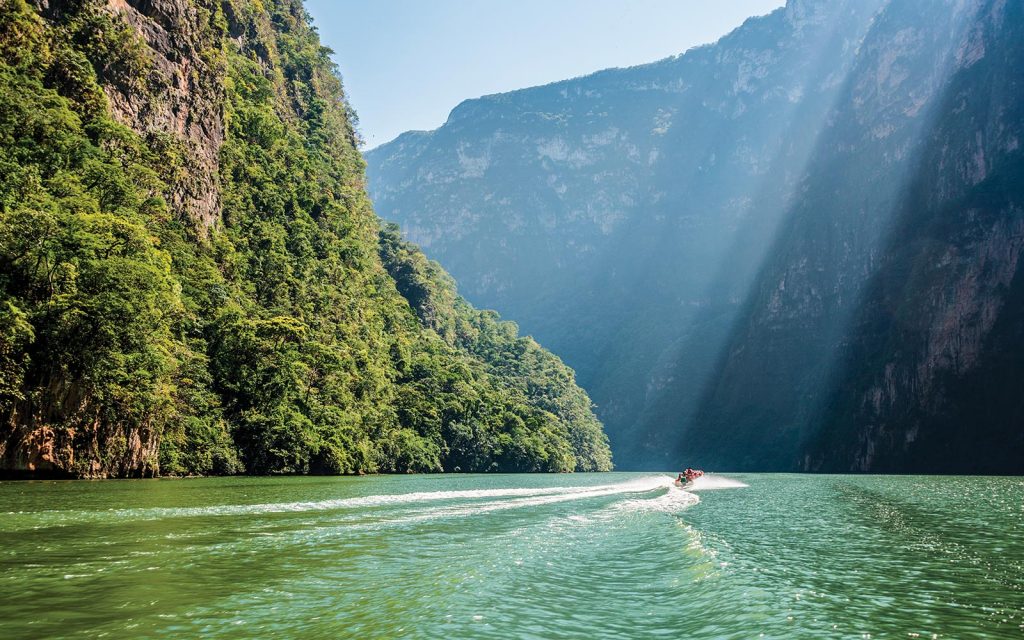
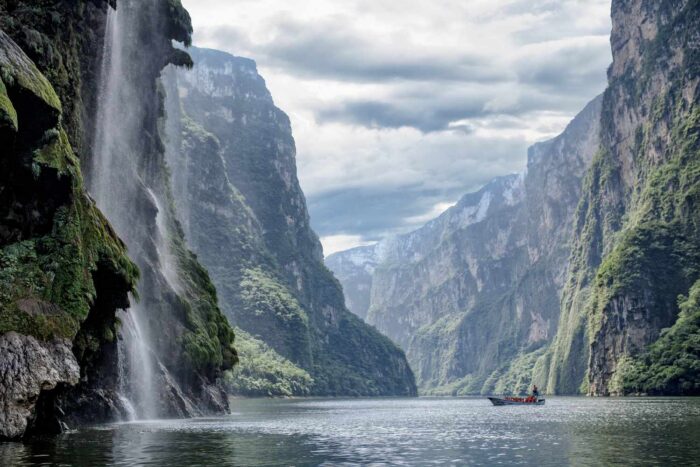
When you turn off the boat’s engine in the middle of the strait, the silence surrounding you becomes almost solid. Before you, the limestone walls rise vertically over a thousand meters, seemingly touching the sky and reminding you of your own scale in the world. In Sumidero Canyon, you aren’t just navigating a river; you are traversing an open wound in the earth that took millions of years to sculpt. It is that moment, as you feel the shadow of the rock giants upon your face, that you understand why this place is the shield and pride of Chiapas.
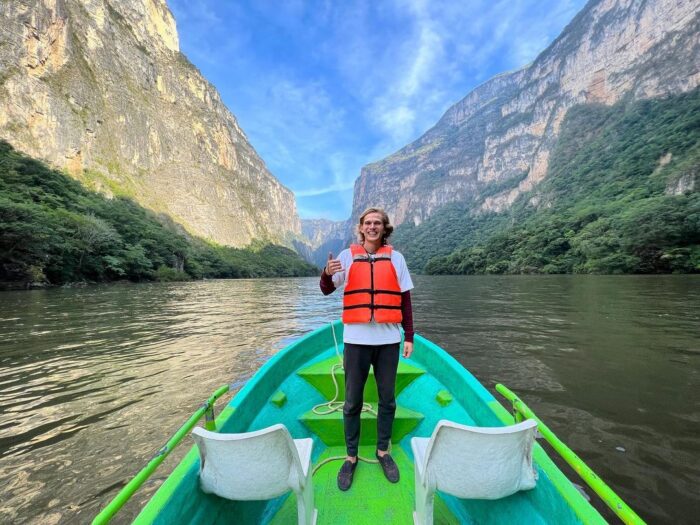
Experiencing the canyon requires two perspectives to be fully understood. The first is from the water, departing from the docks of Chiapa de Corzo. As you move along the Grijalva River, your senses sharpen with the contrast between the vibrant green vegetation hanging from the rocks and the deep blue of the channel. You will see crocodiles resting on the banks and spider monkeys swinging in the highest branches. The true magic happens upon reaching the “Christmas Tree” waterfall, where the water has created moss formations that defy gravity and splash you with a refreshing mist that purifies the spirit.
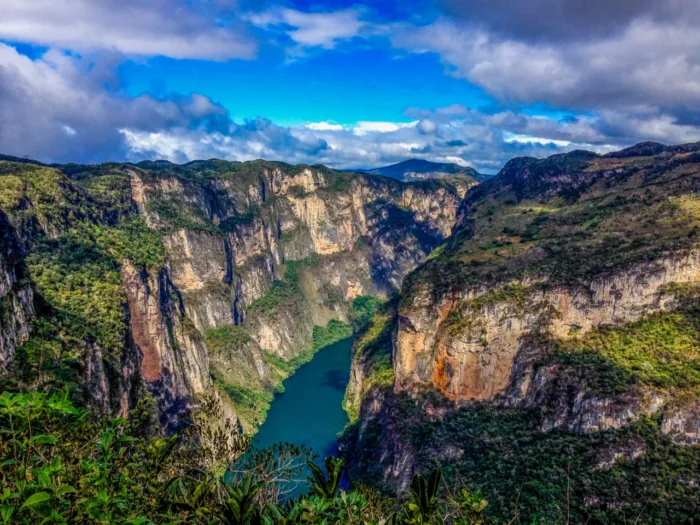
The second facet of your journey occurs in the heights, traveling through the viewpoints located at the top of the cliff. Peering out from points like “La Atalaya” or “Los Chiapa,” you will feel a thrilling vertigo seeing the river as an emerald ribbon far below. It is a journey that balances the adventure of navigation with serene contemplation from the clouds, allowing you to understand that the Sumidero is a living organism, a natural fortress where every cave and every waterfall holds a secret from a geological era.
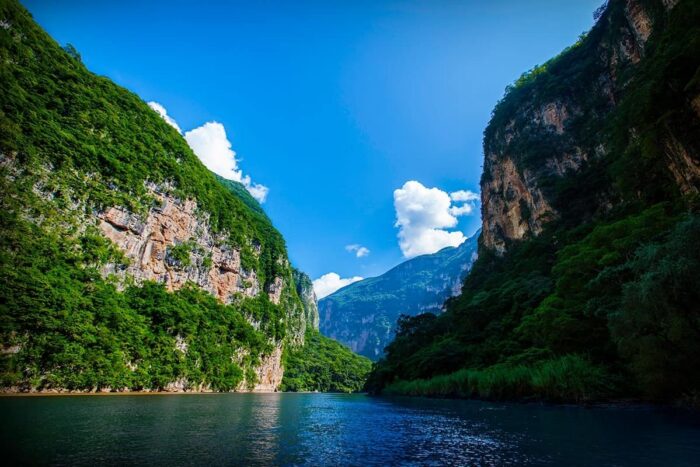
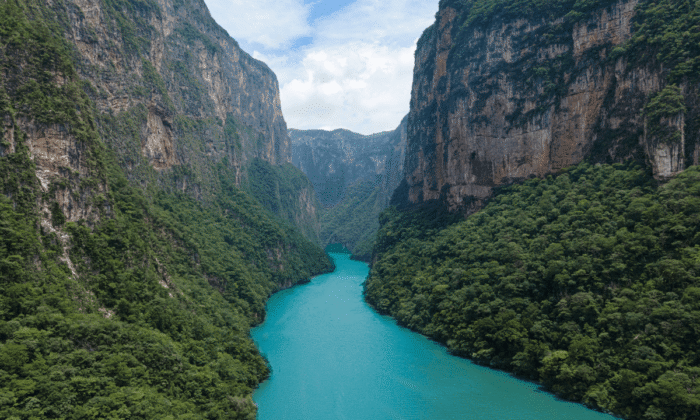
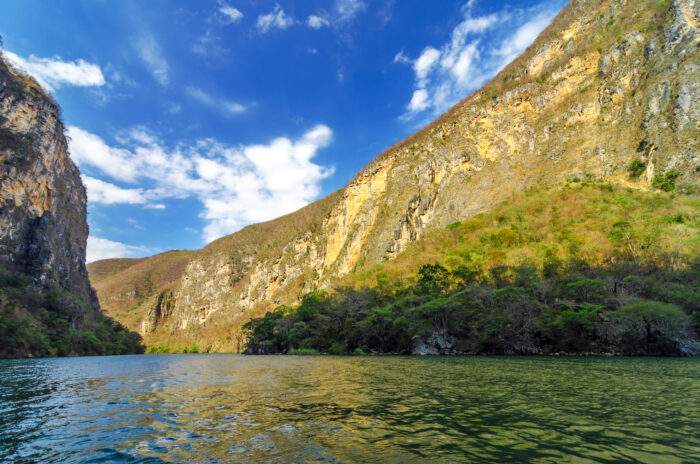
You should know that Sumidero Canyon is a National Park that protects endangered species and is a fundamental pillar of biodiversity in southern Mexico. Its formation began about 36 million years ago and is contemporary with the Alps and the Himalayas. For Mexican history, this place is legendary: tradition says that the Chiapaneca warriors chose to throw themselves into the abyss rather than be subdued by Spanish conquerors, turning these walls into a symbol of resistance and freedom that is now part of the Chiapas state coat of arms.
The importance of this ecosystem also lies in its role as an environmental regulator and water reserve. By visiting this site, you support local communities that have made conservation their way of life. The canyon has survived climate changes and human intervention with the creation of the Chicoasén dam, one of the largest hydroelectric engineering works in the country found at the end of the tour. It is a legacy of natural and cultural strength that invites you to reflect on the importance of protecting the monuments the earth has taken ages to build.
Trip X-Ray
Ideal Duration
Dedicate at least 5 hours; 2 or 3 for the boat tour and the rest to visit the viewpoints by land.
Traveler Tips
Wear sunscreen and a hat; the sun's reflection on the water is intense during the trip. If you seek the best photographs, arrive at the viewpoints early in the morning when the light isn't as harsh and the mist usually clears.
Special Recommendations
Combine your visit with a stroll through the Magic Town of Chiapa de Corzo afterward; trying a cold "pozol" (traditional cocoa and corn drink) is the perfect reward after a tour under the sun.
Insider's Perspective
If you seek a corner that few tourists explore calmly, ask about the “Cueva de Colores” (Cave of Colors). Although boats pass nearby, few stop to observe the religious images and mineral formations that have tinted the rocks in pink and ochre tones. Another insider secret is visiting the viewpoints during October and November; after the rainy season, the jungle looks its most splendid and the internal waterfalls of the canyon are at their most voluminous and spectacular.
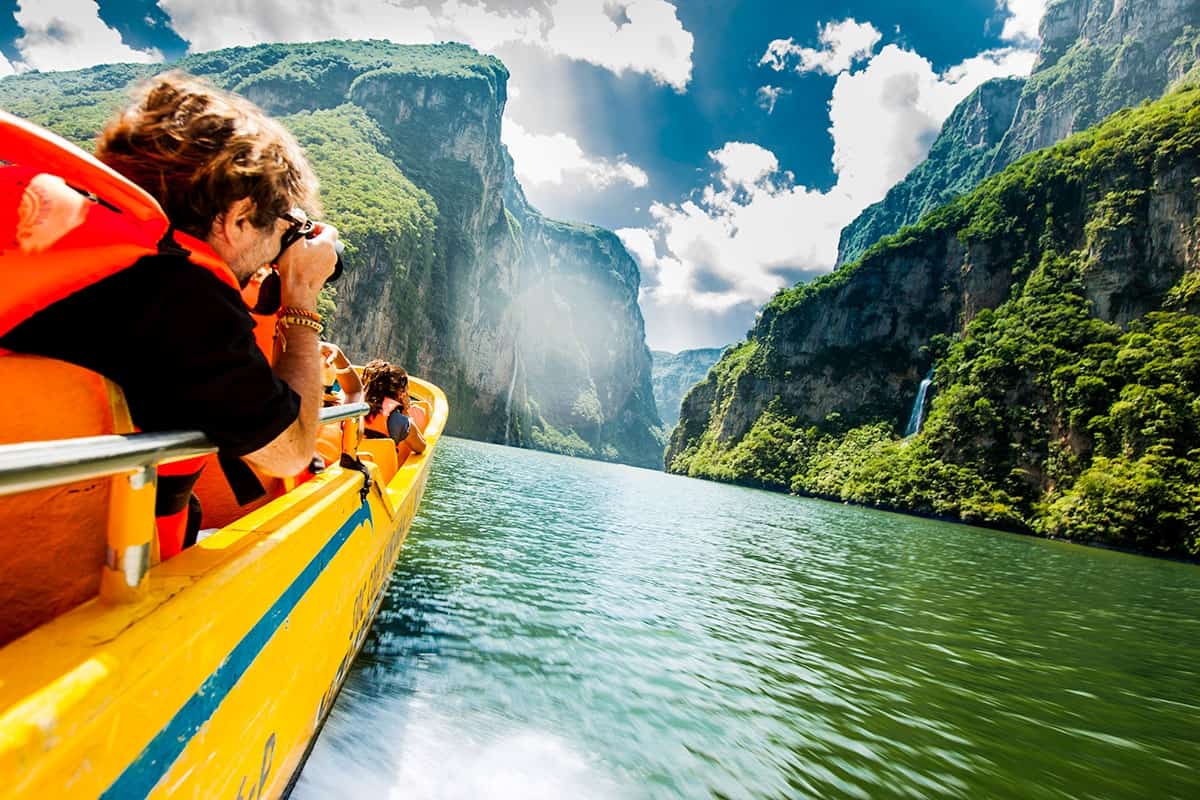
This journey through the heart of the mountain is a reminder that nature always has the last word. It allows you to discover that true beauty resides in the monumental and the wild. We wait for you on the Grijalva channel to prove that, in Sumidero Canyon, the earth is not just observed—it is felt as an eternal sigh emerging from the depths of Chiapas.