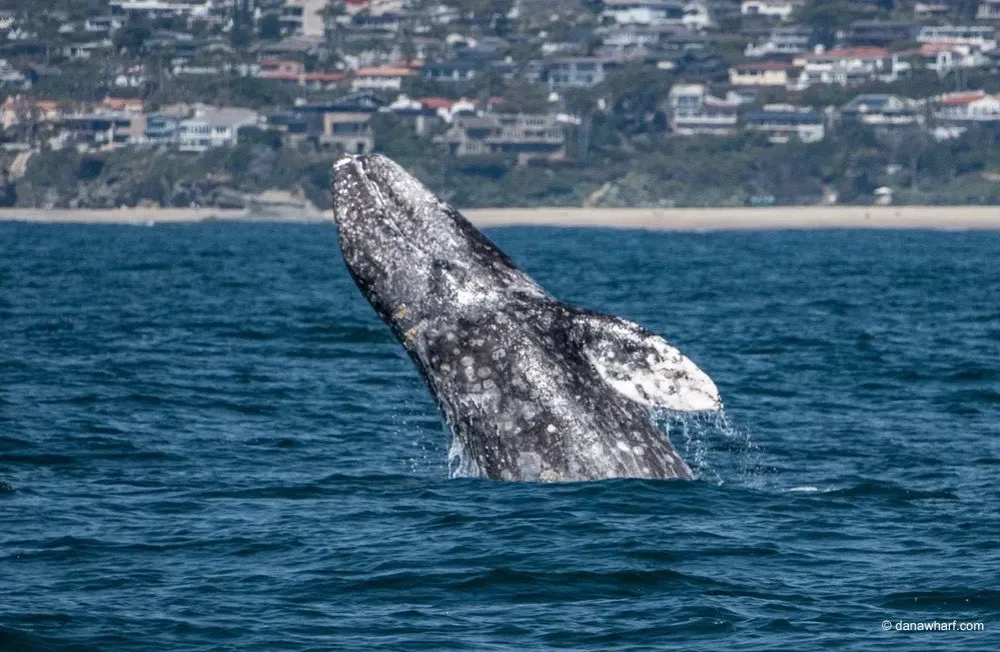
The Gray Whale (Eschrichtius robustus)
Finds its exclusive breeding refuge in the Ojo de Liebre and San Ignacio lagoons (Baja California Sur). It is the only place in the world where this level of close interaction occurs.


A mystical encounter with the majesty of the oceans across three Mexican coasts
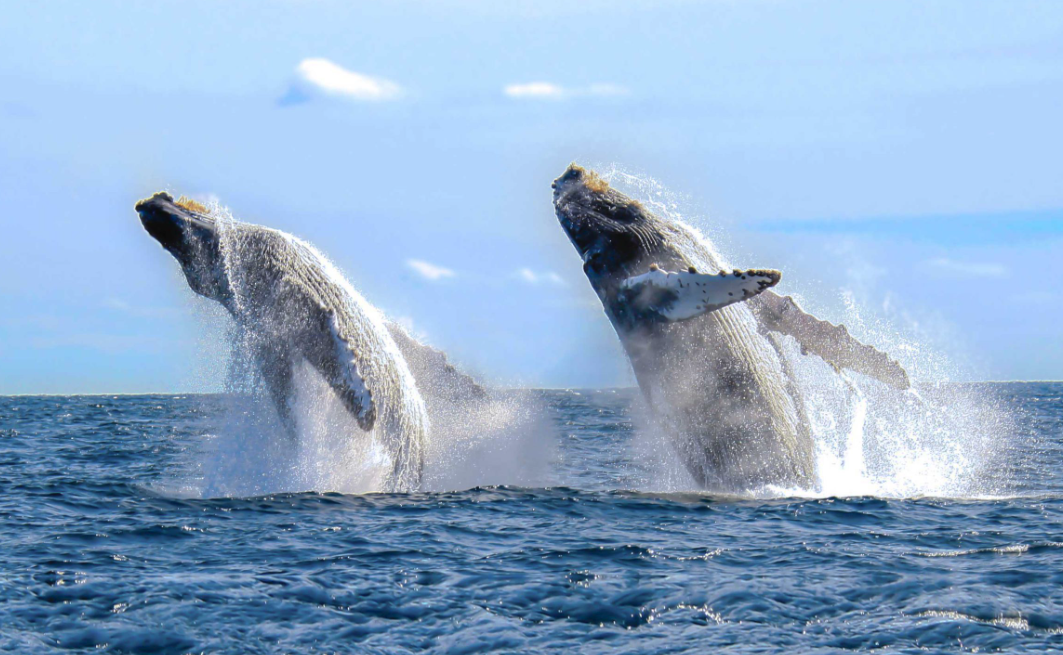
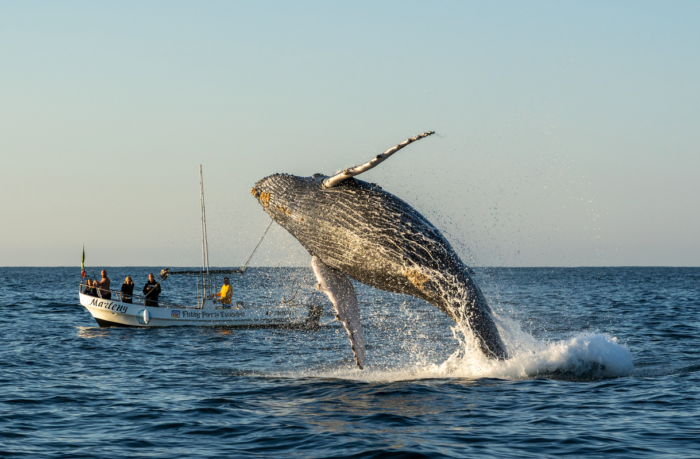
The silence of the ocean is broken by a powerful exhalation that sends a column of spray into the golden sunset sky. At that moment, time stands still. No photograph or story can do justice to the magnitude of a humpback whale breaching just meters away, or the curious gaze of a gray whale seeking human contact. It is a reminder of our own fragility and an invitation to witness a ritual of freedom that has occurred for millennia in Mexico’s marine sanctuaries.
The experience of whale watching begins with the anticipation that floats in the salt air as the vessel ventures into the blue. It is not a passive observation activity; it is a deep sensory connection. It is the sound of the “blow” that reverberates in the chest, the scent of the open sea, and the vibration of the water when a forty-ton giant decides to breach, defying gravity in a display of pure power.
In the lagoons of Baja California, the experience becomes surprisingly intimate as gray whales, known for their friendliness, approach the boats so travelers can touch their rugged skin—an interaction many describe as life-changing. In contrast, in Banderas Bay, the soul of the experience is the music; the use of hydrophones allows you to hear the complex and melancholic song of male humpbacks, an underwater serenade that resonates within the spectator. It is a lesson in humility and a celebration of life in its most monumental form.
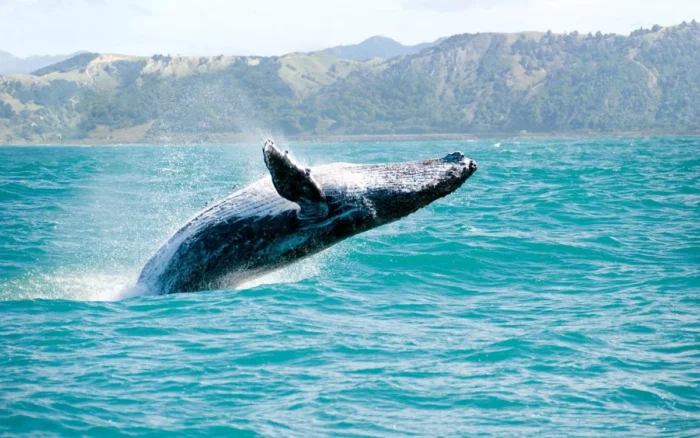
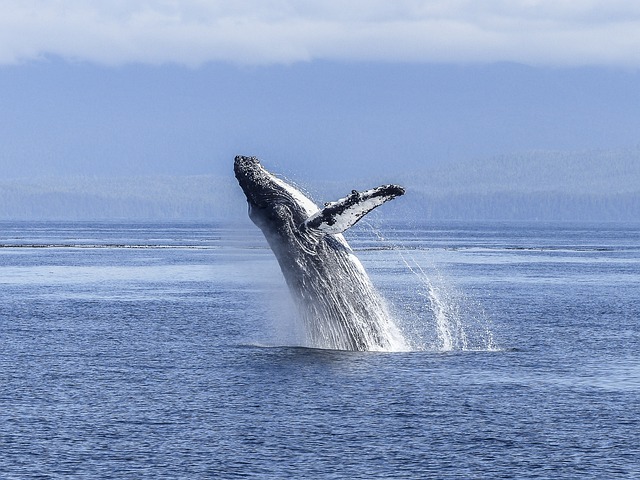

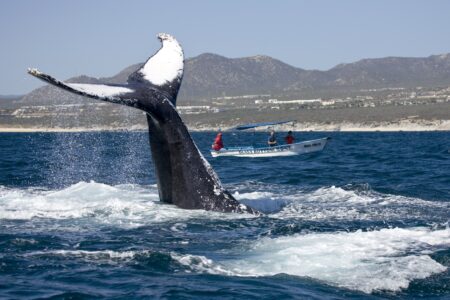

Mexico is not just a watching destination; it is the home and nursery of these mammals. The country’s commitment to conservation is historic, having declared the Sea of Cortez and the lagoons of Baja California as World Heritage sites and protected areas. Every year, thousands of whales migrate from the Arctic, traveling over 10,000 kilometers to give birth to their calves in Mexican waters, seeking the warmth and safety that only our ecosystems offer.
Finds its exclusive breeding refuge in the Ojo de Liebre and San Ignacio lagoons (Baja California Sur). It is the only place in the world where this level of close interaction occurs.
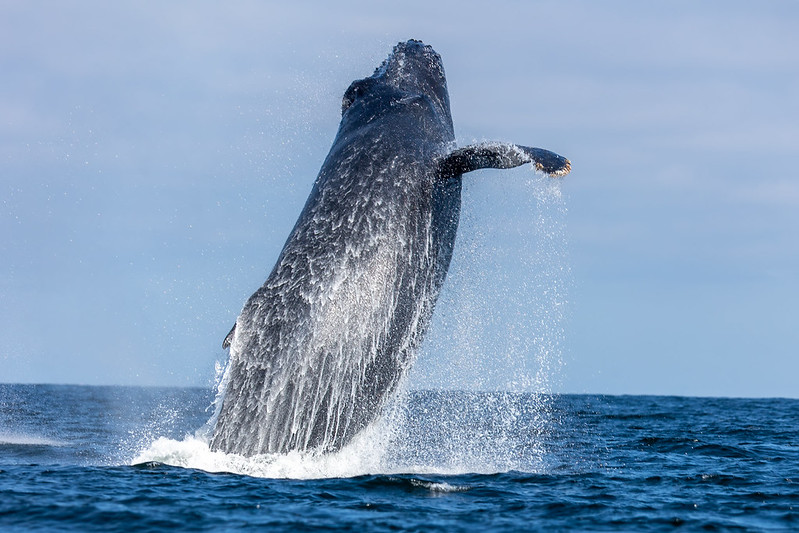
Famous for its acrobatics and songs, it frequents the coasts of Nayarit, Jalisco, and the Revillagigedo Archipelago.
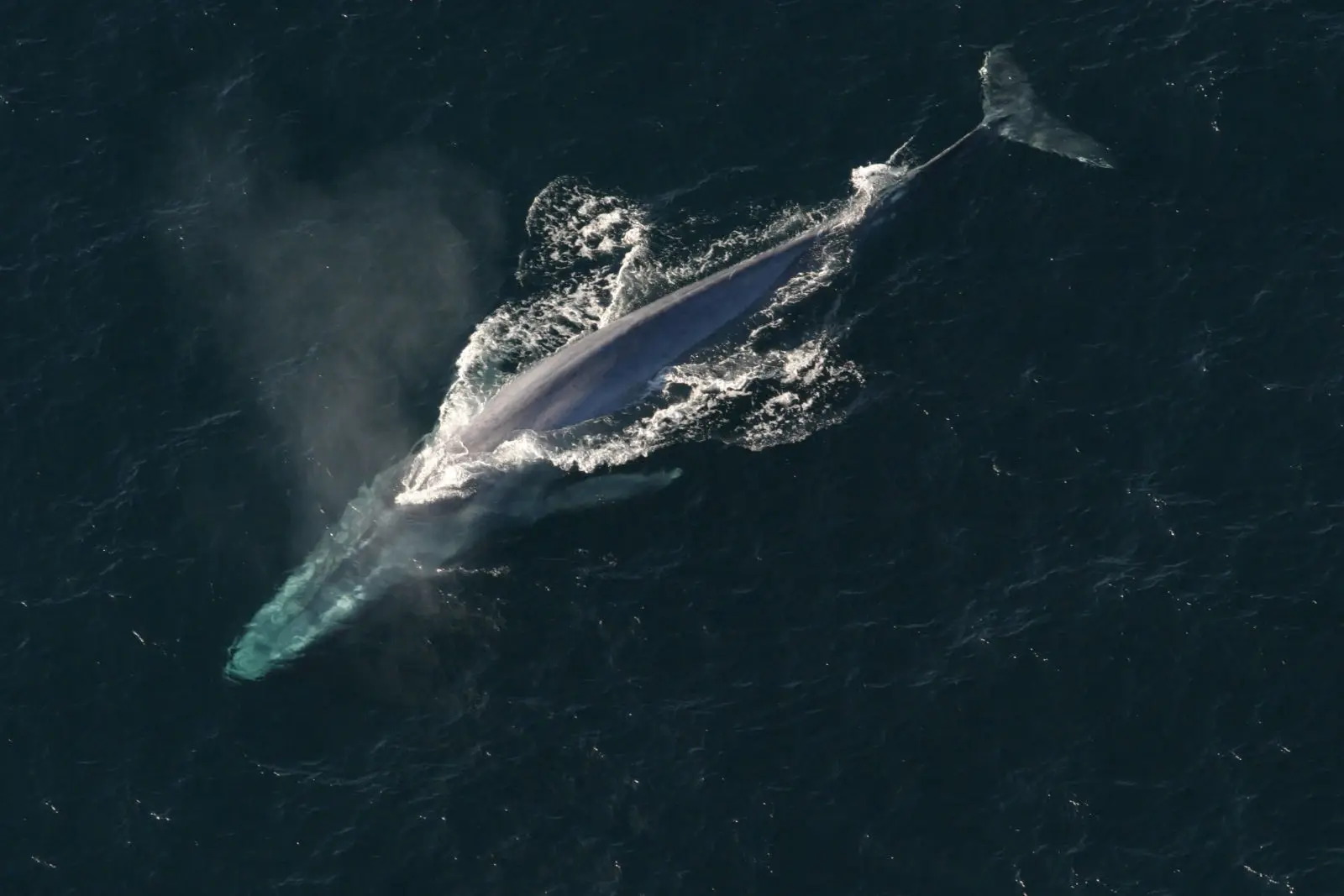
The largest animal to ever exist on Earth chooses the Loreto Bay National Park to feed and nurse its young.
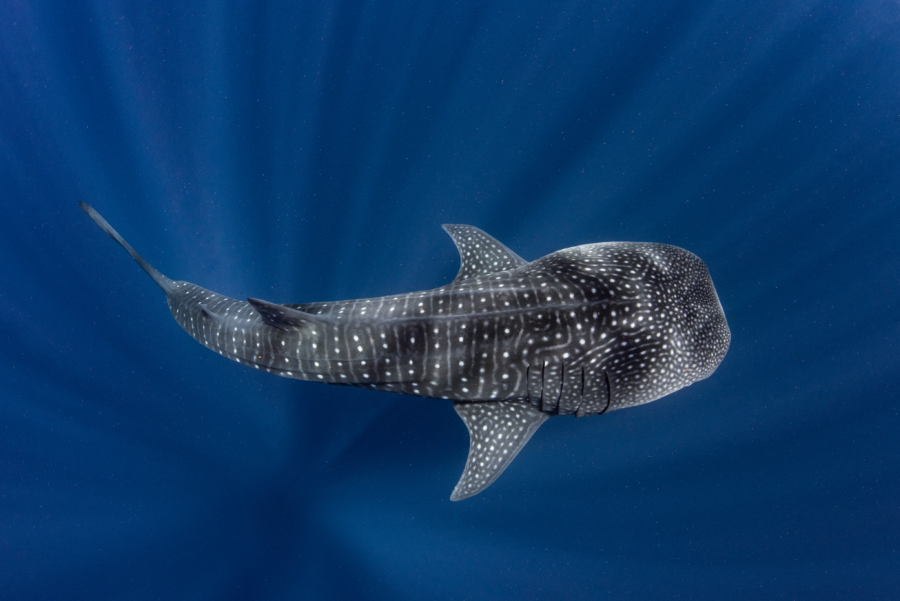
Although not a cetacean, this gentle giant also visits the Caribbean coasts (Holbox and Cancun) and the Sea of Cortez, completing the map of marine colossi in national territory.
Always choose operators with official SEMARNAT authorization flags, which guarantee respect for safety distances to avoid stressing the animals.
To elevate the experience, book a private charter with a marine biologist on board; scientific interpretation of behaviors transforms watching into a masterclass in nature.
While Los Cabos is the most famous spot, the true insider travels to Loreto or Bahía de los Ángeles. In these locations, tourist density is minimal, and the connection with the environment is total. In Loreto, you won’t just see whales; you’ll be surrounded by dolphins and sea lions in an environment Jacques Cousteau called “The Aquarium of the World.” Another local secret is visiting whale watching spots in Mazatlán, which have recently gained great relevance due to the clarity of their waters for underwater photography.
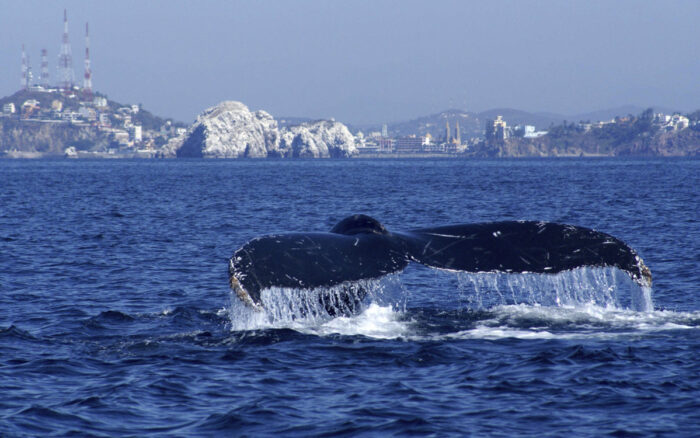
Whale watching in Mexico is not a seasonal activity; it is an encounter with the eternal. It is an invitation to disconnect from the noise of the modern world to tune into the frequency of pure nature. We invite you to navigate these waters and discover that, in the gaze of a giant, one finds the answers to the deepest beauty of our planet. Mexico and its giants await you.