

Mexico’s Palo de Rosa Season
For a few weeks each year, some Mexican cities seem to shift into a different mood—and a different color palette. Sidewalks collect soft pink petals. Tree canopies flare into bloom. The everyday cityscape turns brighter, quieter, almost dreamlike.
It’s not Japan. It’s Mexico.
And it happens during Palo de Rosa season.
What’s happening?
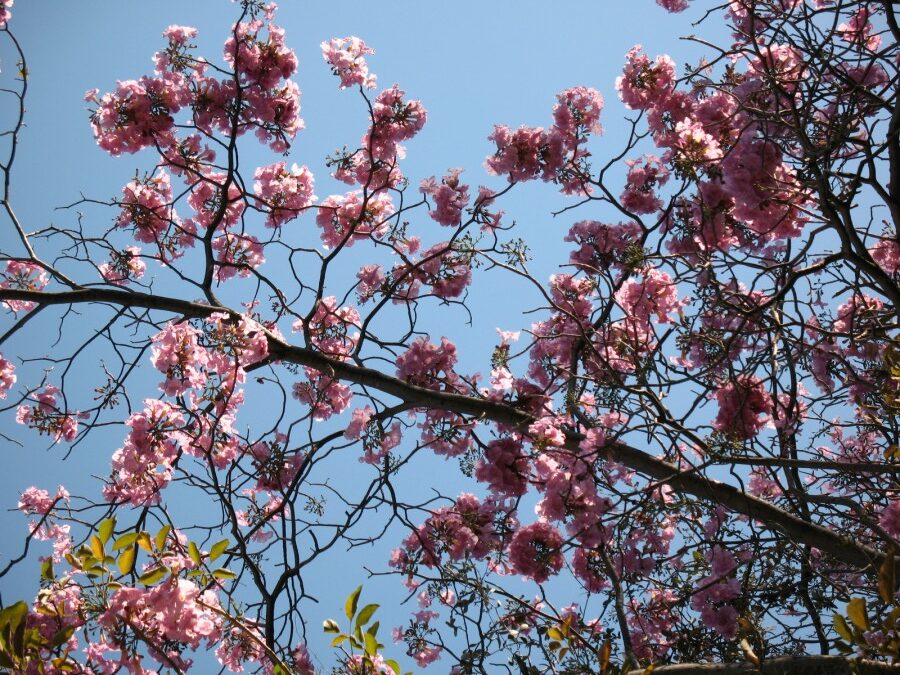
Between late winter and early summer, Palo de Rosa—also known as maculis (Tabebuia rosea)—moves through a short, intense flowering cycle. For a brief window, the tree drops most of its leaves and lets clusters of pink blossoms take over completely, transforming streets, parks, and boulevards into living scenery.
It’s a fleeting event. It arrives fast, doesn’t follow a strict schedule, and ends almost as suddenly—leaving behind only petals, photos, and the feeling that you caught something rare.
When to catch it
February to May
With the most spectacular peak typically between March and April.
Blooming can shift quickly. One day, a tree is fully green; the next, pink dominates the street. Traveling within this window gives you your best chance to see it at its peak.
Imperdibles
Where to experience it




How the moment unfolds
There are no tickets and no fixed viewing times. Palo de Rosa season is something you find by walking—slowly: a side street, a plaza, a park near sunset. Petals fall like a natural carpet. Hummingbirds and bees hover through the blossoms. The city feels calmer, softer, more attentive.
For many travelers—and especially photographers—this is one of the most anticipated natural moments of the year.
Why it feels uniquely Mexican
This tree exists across parts of Latin America, but in Mexico it’s deeply tied to urban life and collective memory. It isn’t a curated garden display—it’s nature showing up in the middle of the daily routine.
Beyond its beauty, Palo de Rosa supports pollinators and has long been used in traditional medicinal and craft practices, linking ecology and culture in a very Mexican way: practical, close to the street, and quietly meaningful.
Reglas de Oro
Tips for enjoying Palo de Rosa season
1.
Plan your trip for March or April to increase your chances of peak bloom.
2.
Explore on foot—the best scenes appear without trying.
3.
Respect the trees and their environment: don’t cut branches or pick flowers.
4.
Bring a camera, but also make time to simply watch.
A season without an announcement
Palo de Rosa doesn’t warn you. It simply blooms.
And when it does, it makes the ordinary feel unexpectedly special.
If you’re visiting Mexico in spring, stay alert—you might turn a corner and find a street transformed for a few days into one of the most beautiful memories of your trip.