
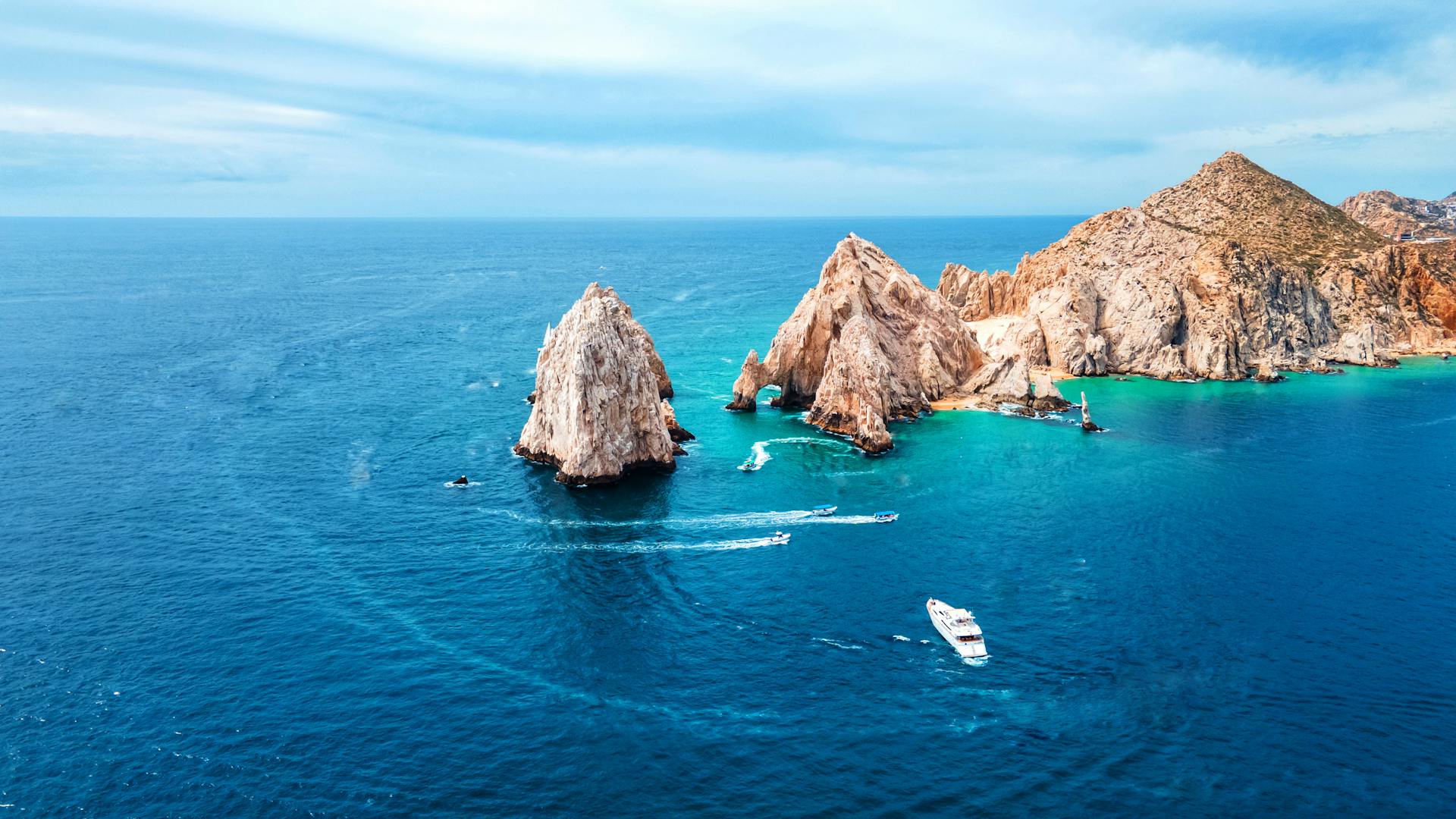
Baja California Sur
A Paradise Between Two Seas
Baja California Sur moves at a different pace, where time feels less fixed, shaped instead by light, tides, and distance. At the narrow end of the peninsula, land gives way entirely to the sea: the open Pacific on one side, the calm, life-filled Sea of Cortes on the other. Between them stretches a luminous desertquiet, expansive, and marked by old missions and roads that seem to lead endlessly forward. Traveling through Baja California Sur is an exercise in simplicity. Days begin by the water, unfold with shifting light, and end according to natural rhythms rather than schedules. This is not only a beach destination. It is a place for close encounters with whales, sunsets best experienced in silence, and coastal towns where daily life remains closely tied to the sea. Hospitality here is unforced and genuine. Adventure and rest coexist naturally. One day may include swimming with sea lions or exploring coral reefs; the next, a slow walk through town or dinner under a wide night sky. Baja California Sur suits travelers seeking meaningful experiences, to be in touch with nature, and a journey that feels light in pace but lasting in memory.
Why to Visit
Baja California Sur does not demand attention—it reveals itself gradually. Open sea, living desert, and a way of traveling where restraint matters. It appeals to those seeking unfiltered nature, quiet moments, and experiences that feel authentic from the start. A place where the journey continues long after leaving, carried in memory rather than miles.
Key Destinations
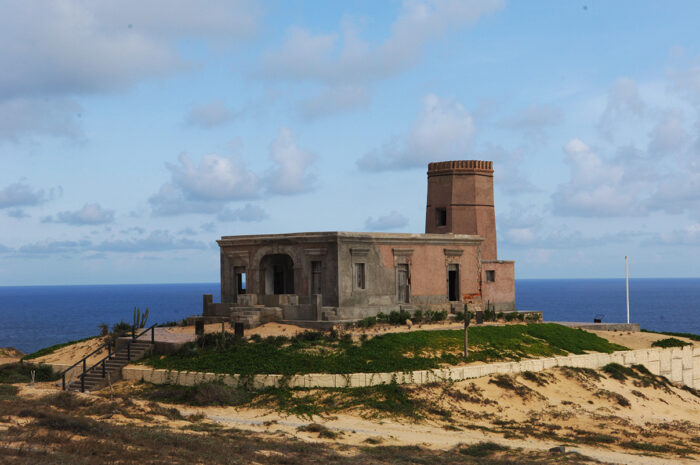
Los Cabos
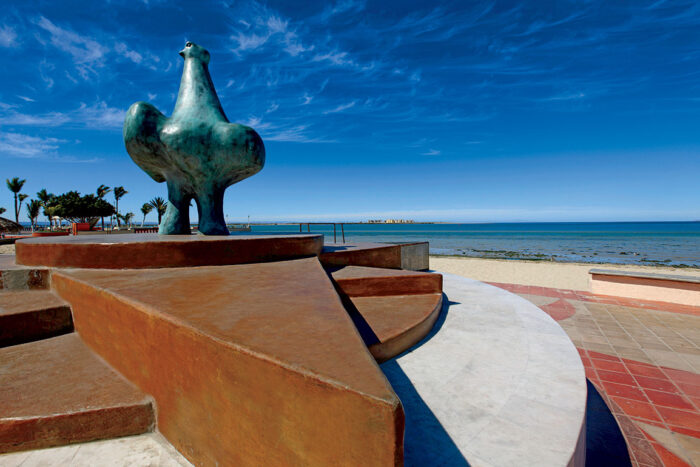
La Paz
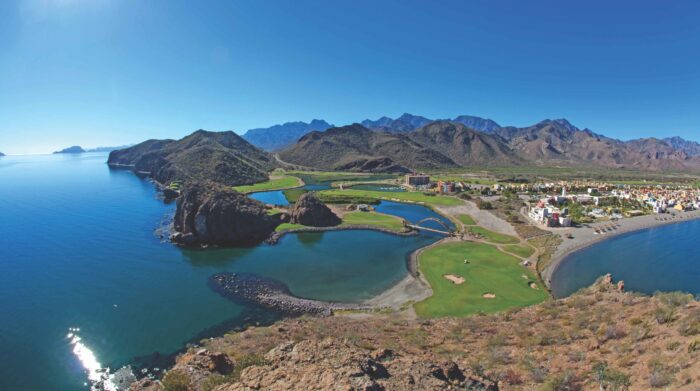
Loreto
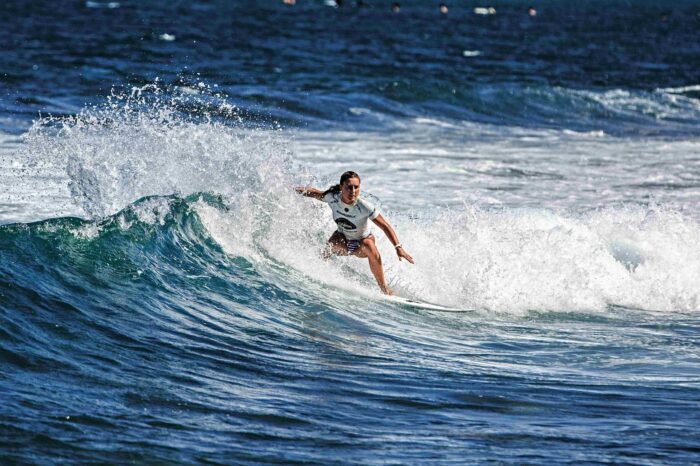
Todos Santos
HIGHLIGHTS
The Signature Experience

Oasis, History, and Nature in Mulege
A river cuts through the desert on its way to the sea—and in its wake, an oasis comes to life. Discover the quiet magic of Mulege, where palms, water, and mission history soften the edges of Baja California Sur.

Walking the Shallows of Balandra
Experiencing Playa Balandra in La Paz, often voted Mexico’s most beautiful beach.
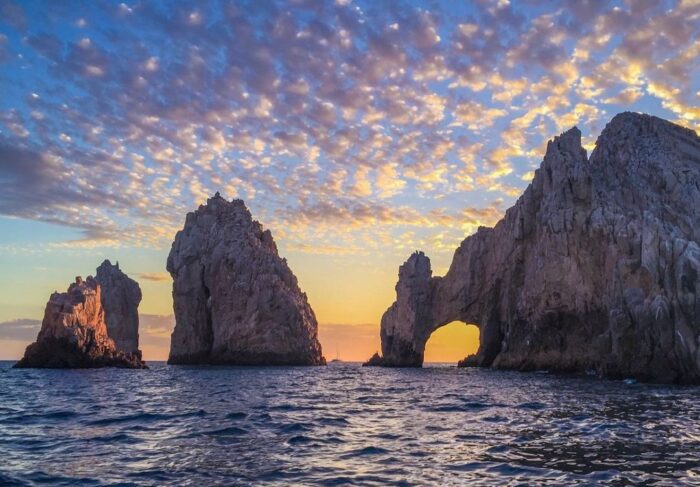
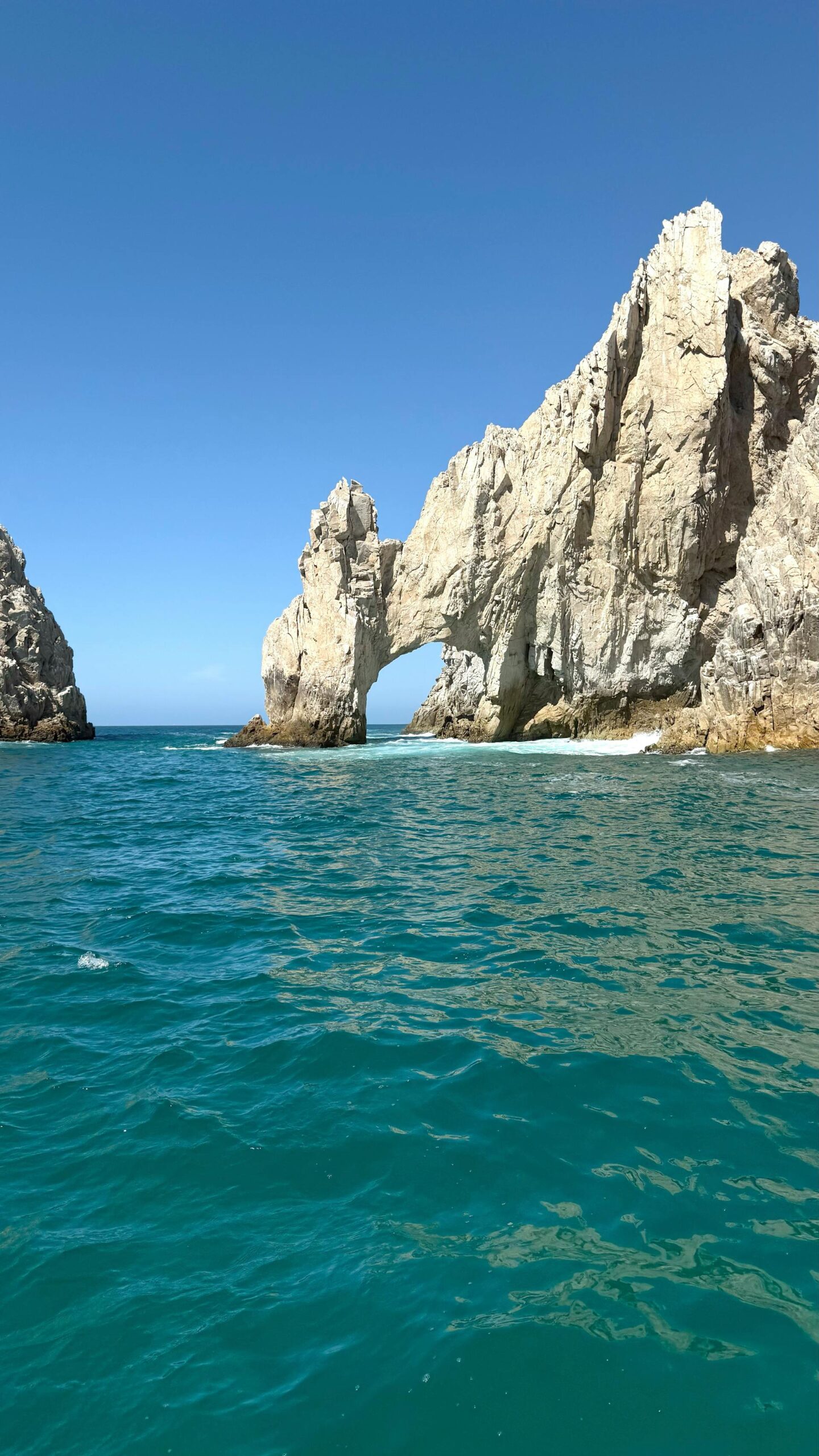
Sunset at The Arch (El Arco)
The definitive image of Baja California Sur.
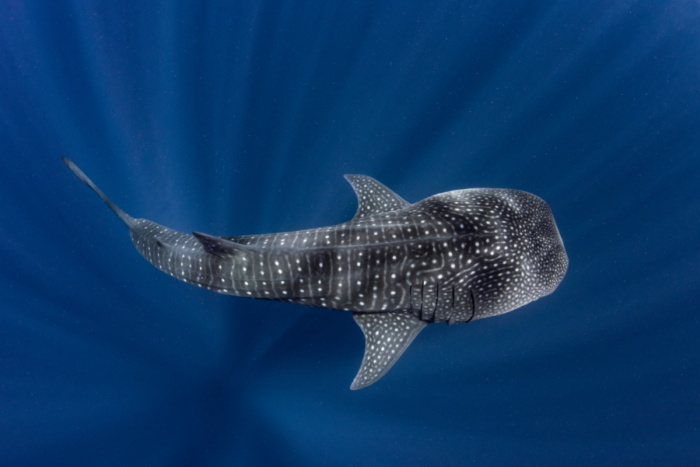
Swimming with Whale Sharks & Sea Lions In the Bay of La Paz
Slip into the water to swim alongside gentle whale sharks (the world’s largest fish)
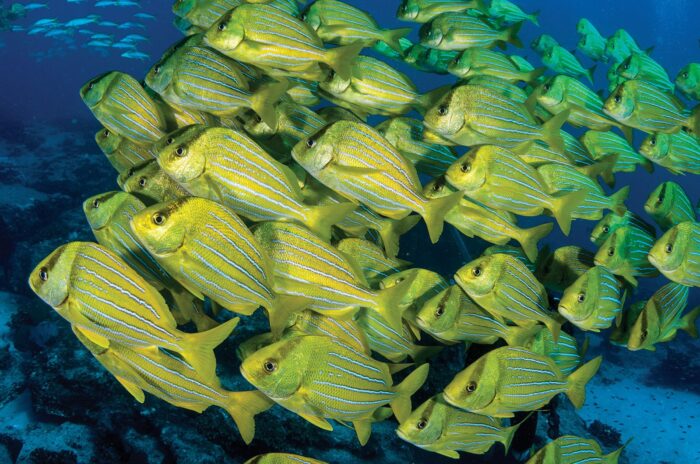
Diving or snorkeling in the Cabo Pulmo National Marine Park
It is a conservation success story where you can swim in “tornadoes” of jackfish, see bull sharks, and witness a marine ecosystem in full, vibrant recovery.
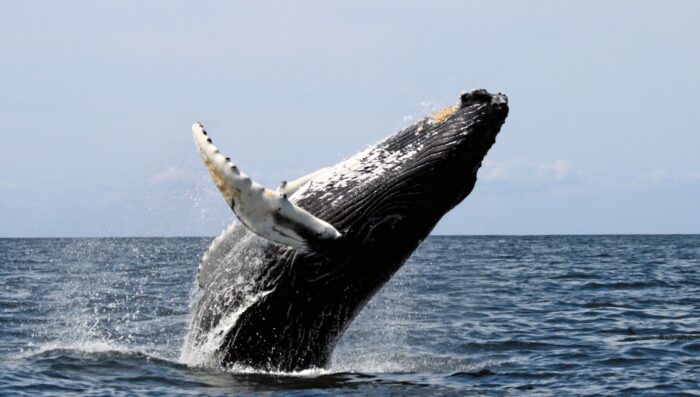
Whales in Magdalena Bay
Friendly Whales in the Lagoons A truly life-changing encounter found nowhere else on Earth.
BEST FOR
Regional Vibes
Sun and Beach / Wellness and Spiritual
Positioned as the premier “Barefoot Luxury” destination, the focus here is on restricted access to pristine environments. Beyond high-end marine contemplation like whale watching, towns like Todos Santos and Loreto offer “Slow Travel” focused on yoga, art, and digital disconnection
Dual-Natured Luxury & Ecological Immersion
Dual-Natured Luxury & Ecological Immersion Baja California Sur (BCS) operates on a distinct dichotomy. The southern tip (Los Cabos) functions as a global engine of High-Impact Luxury, characterized by massive infrastructure, championship golf courses, and brand-name hospitality. In contrast, the northern and central regions (Loreto, La Paz, Mulegé) retain a vocation of Quiet Conservation, focused on low-density ecotourism, silence, and biological interaction.
The Ultra-Luxury Seeker, The Scientific Observer
Momentours
The “Aquarium” Season
August – November)When the Sea of Cortez is at its warmest and visibility is crystal clear. This is the peak season for diving in Cabo Pulmo, exploring reefs, and snorkeling with sea lions, as the water temperature is perfect for long immersions
Whale Shark Season
October – AprilThe chance to swim alongside the world’s largest fish in the Bay of La Paz. The experience is highly regulated to protect the sharks, ensuring a serene and respectful encounter.
Gray Whale Migration
January – MarchThe arrival of gray whales to the protected lagoons of the Pacific (Magdalena Bay, San Ignacio, and Ojo de Liebre). It is one of the planet’s most intimate wildlife encounters, where mothers often bring their calves right up to the pangas.
Travel toolkit
Sunshine defines Baja California Sur for most of the year. The most comfortable season runs from November to April. Summer temperatures rise to 32–36 °C (90–97 °F); in winter, they settle between 20–25 °C (68–77 °F).
The airports in Los Cabos and La Paz handle most incoming flights, with ABC and Aguila buses connecting cities. For beaches and scenic routes, renting a car is ideal; in urban areas, taxis are available. Uber is available, mainly in tourist areas such as Cabo San Lucas, San José del Cabo, and La Paz.
Living Heritage
Culinary Soul
Baja California Sur’s cuisine is defined by the immediacy of the ocean and the resilience of the desert ranch. It is a kitchen of pure ingredients where the catch of the day is often on the plate within hours. While the north is known for innovation, the south is the guardian of tradition—smoking fish to preserve it, roasting clams on beach gravel, and sweetening life with fruits from the desert oases. It is food that tastes of salt, smoke, and sun.
Almejas Tatemadas (Roasted Chocolate Clams): The signature ritual of Loreto. Large chocolate clams (named for their shell color) are buried tip-down in gravel and covered with dry brush, which is set on fire. They cook in their own juices, absorbing a smoky, earthy flavor that is unlike any other seafood preparation.
Marlin Ahumado (Smoked Marlin): Often called “the ham of the sea.” The firm, reddish meat of the marlin is wood-smoked and shredded, then used to fill tacos, tostadas, or mixed with eggs. It has a dense, savory profile that anchors the lighter coastal flavors.
- Machaca de Mantarraya: A traditional dish born from necessity. Stingray meat is salted and dried (machaca), then rehydrated and cooked with tomato, onion, and green chile. It is usually served in burritos or with flour tortillas, showcasing the region’s ability to turn the sea’s bounty into hearty sustenance.
- Ate de Guayaba & Mango: In the oasis towns like Todos Santos and Mulegé, the desert yields surprisingly lush fruits. These are slow-cooked into dense jellies (ates) or preserved in syrup, a sweet legacy of the mission era.