

Highlight
Diving in Cozumel: The Kingdom of Glass and Coral
A Journey into the World’s Second-Largest Barrier Reef Under the Caribbean Light
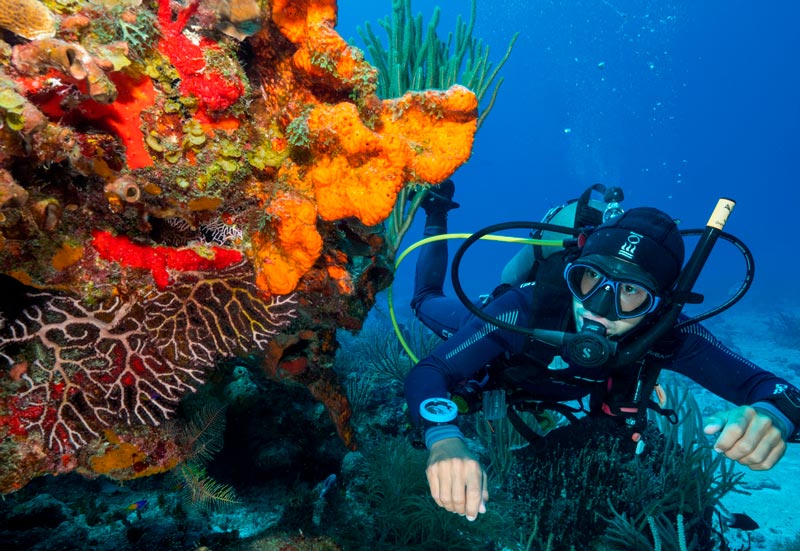
As you make your first entry into the water, the outside world switches off to make way for a blue so electric and pure that it seems endless. In Cozumel, you feel gravity vanish just as your eyes adjust to the legendary clarity of its waters. You aren’t simply diving; you are soaring over a submerged mountain range where life bustles in every crevice. It is that moment, as you glide alongside a coral wall dropping into the abyss, when you realize the island doesn’t end at the shore—it truly begins beneath the surface.
Living the underwater experience in Cozumel means surrendering to the current. Most dives here are “drift dives,” allowing you to float effortlessly while the reef parades before you like a high-definition film. You will feel the majesty of sites like Palancar Reef, where coral structures form cathedrals, tunnels, and caves that filter sunlight in magical ways. It’s not just about observing fish; it’s about being part of an ecosystem where sea turtles, eagle rays, and the endemic Cozumel splendid toadfish coexist in silent, perfect harmony.
The true magic lies in the variety of its landscapes. You can explore shallow gardens ideal for your first dive or challenge your senses at Santa Rosa Wall, where the blue turns to cobalt and the scale of the black corals takes your breath away. It is a journey that balances the adrenaline of the descent with the meditation provided by the rhythm of your own breath, leaving you with the certainty that you have visited one of the ocean’s last pristine gardens.
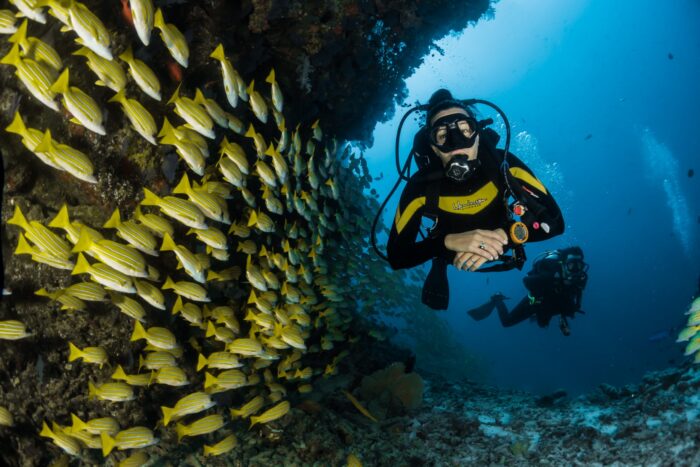
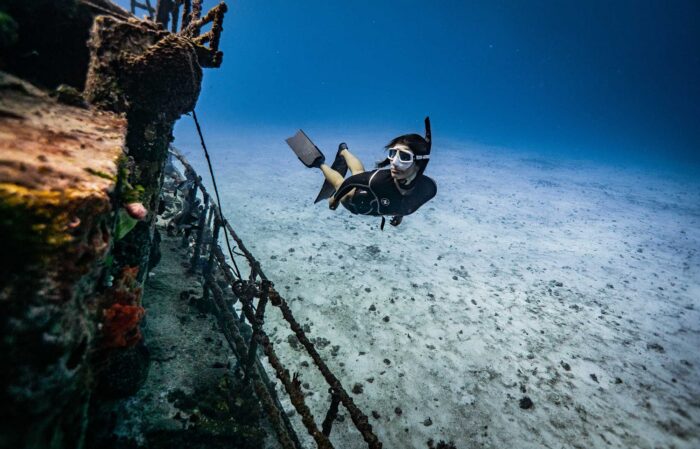
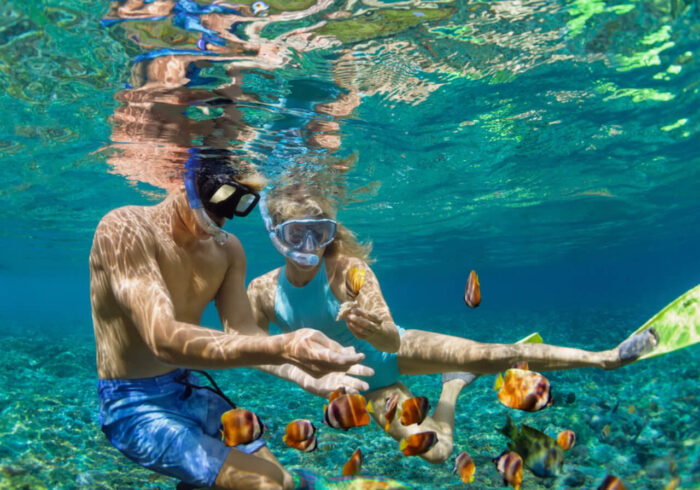
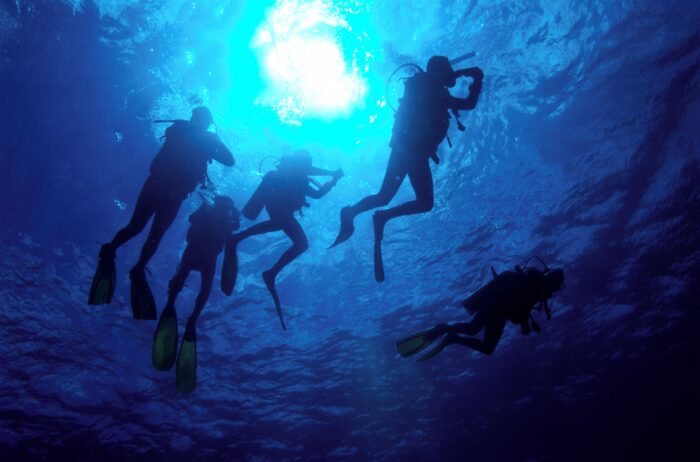
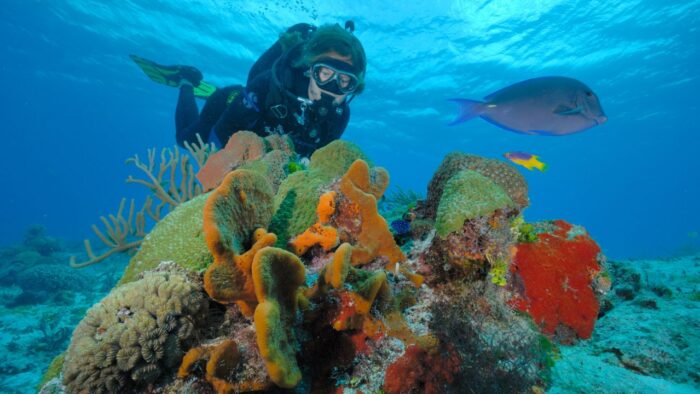
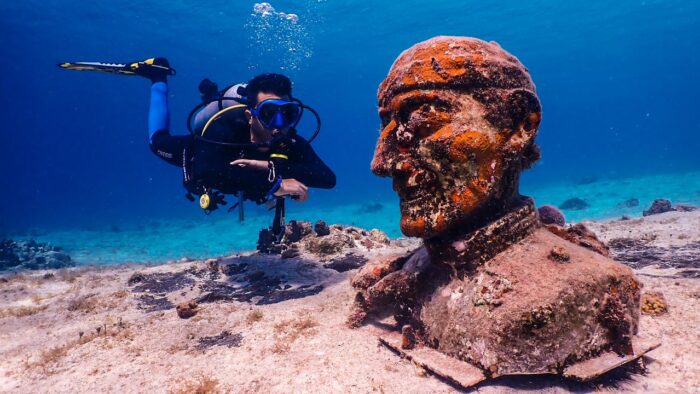
You should know that Cozumel was dubbed by Jacques Cousteau in the 1960s as one of the best diving spots in the world, putting the island on the international map. Most of its reefs are part of the Cozumel Reefs National Park, a protected area ensuring the conservation of species found nowhere else. For the ancient Maya, the island was a sacred pilgrimage center dedicated to the goddess Ixchel, and it is believed that navigators already knew the richness of these coral banks for subsistence and protection.
The importance of this heritage lies in its role as a marine lung for the Caribbean. By diving in Cozumel, you become a witness to the health of the oceans. The island has led coral restoration efforts and responsible diving practices that serve as a global model. It is a legacy of biodiversity that invites you to value the fragility of marine life, reminding you that every dive is a privilege that demands absolute respect for currents, creatures, and the delicate balance of the reef.
Trip X-Ray
Ideal Duration
Book at least 3 days of diving to explore both the southern reefs and the intermediate tunnels.
Traveler Tips
Visibility often exceeds 100 feet, but currents can be strong. Ensure you carry your dive computer and always follow the divemaster. If you are not certified, many centers offer "Discovery" courses in safe and spectacular areas.
Special Recommendations
Go for a night dive; the reef completely transforms, revealing species that only come out in the dark and offering a bioluminescence show if you are lucky.
Insider's Perspective
If you seek an authentic corner away from the cruise ships, head to the northern reefs like Cantarel, where in winter it is common to see groups of eagle rays in formation. Another insider secret is visiting “El Cielo” after your dives; it is a shallow sandbar full of starfish where the crystal-clear water allows you to relax and process the day’s adventure in an environment of absolute peace.
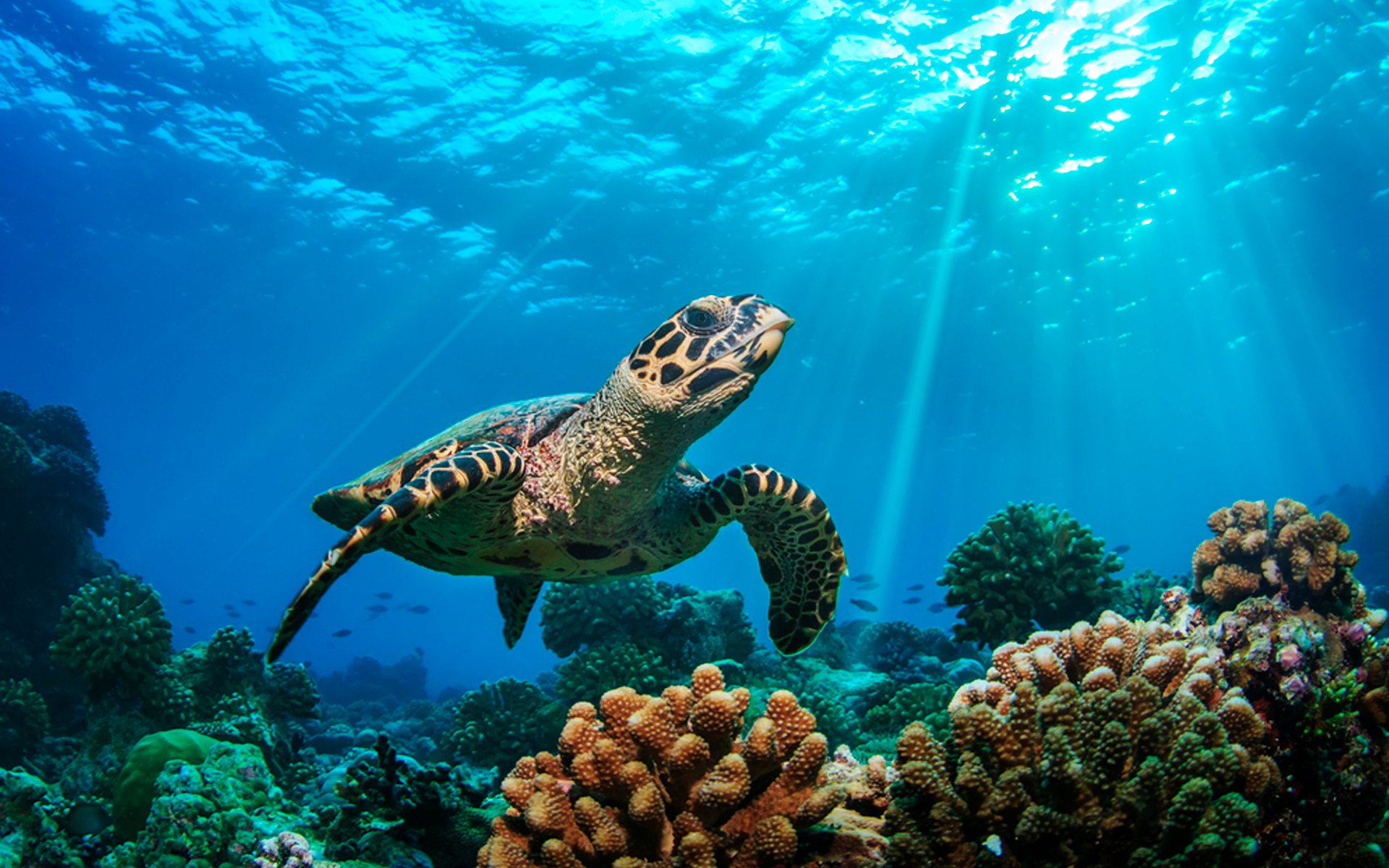
This journey through the depths of Cozumel is an invitation to discover peace in weightlessness. It allows you to understand that true luxury is found in the clarity of the water and the vibration of a healthy reef. We wait for you beneath the turquoise mirror to prove that, on this island, blue is a feeling that stays with you long after you have returned to the surface.