Northeast Mexico
Region

Northeast Mexico

From the Gulf to the desert, Northeast Mexico is a region shaped by sea, mountains, and high plains, where resilience and a deep respect for the land define daily life.

Northeast Mexico is not a single image; it is a region in constant motion. This is where the country opens up, where distances feel larger and the land shapes the character of those who live on it. From the open waters of the Gulf of Mexico in Tamaulipas to the deep, quiet deserts of Coahuila, and across the monumental mountain ranges of Nuevo Leon, the region is built on contrasts that coexist with pride and determination.
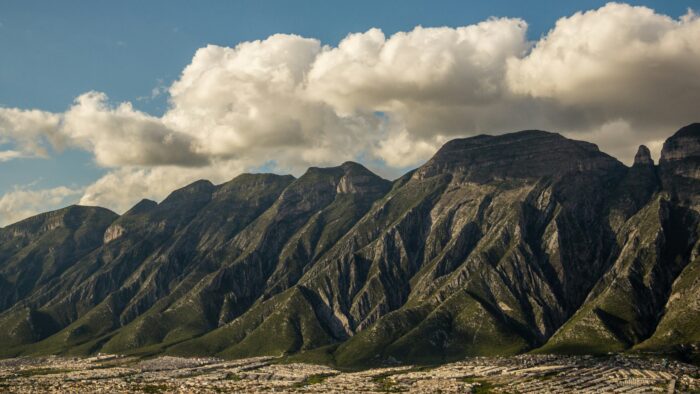
The land here is never passive. The Sierra Madre Oriental cuts through the territory like a backbone of stone, canyons, and forests, creating landscapes that change dramatically within a few kilometers. Hidden waterfalls, vertical rock walls, turquoise rivers, and mountains that demand respect make the Northeast a powerful natural setting, well suited for ecotourism, exploration, and silence.
Beyond the green slopes of the Sierra de Arteaga, the desert of Coahuila reveals an unexpected vitality. In the heart of the arid landscape lies Cuatro Cienegas, a one-of-a-kind ecosystem: crystal-clear pools, endemic species, and a fragile balance that has endured for thousands of years. It is a reminder that the Northeast is not only about endurance, but also about delicacy. Here, the desert shelters life, geological history, and a beauty that needs no embellishment.
To the east, Tamaulipas opens toward the sea. The Gulf of Mexico sets the rhythm of the coastline, fishing traditions, and the port character of cities like Tampico, where saltwater, architecture, and economic history intertwine. During the Porfirio Diaz era, Tampico was one of Mexico’s most important commercial hubs, playing a key role in trade and modernization. That legacy remains visible in its buildings, its relationship with the port, and an identity that naturally blends the sea, the tropics, and the North.
Nuevo Leon represents another face of the region: industrial growth and urban ambition, always in dialogue with the mountains. Monterrey developed with the Cerro de la Silla as its constant reference, a defining symbol of the local character, while its economic projects left a lasting mark on the country. Yet Nuevo Leon is also deeply natural. Here rises Cerro de Potosi, the highest peak in northern Mexico, its often snow-dusted summit inviting exploration. In the canyons of the Sierra Madre Occidental, hiking routes wind through water-carved paths and towering stone walls.
The Northeast cannot be understood through landscape or economy alone. It is also a region of layered histories. Coahuila played a central role in the Mexican Revolution, giving rise to key figures and serving as a corridor for armies, ideas, and conflict. Long before that, nomadic cultures moved across the northern territories following the rhythms of the land, while in the Huasteca of Tamaulipas, communities such as the Teenek developed a close relationship with water, jungle environments, and music. These roots—nomadic, agricultural, ranching, and port-based—remain alive in the regional identity.
All of this is reflected in everyday life: in ranching traditions, fishing, hard work, and the shared table. Carne asada is not just food; it is a social ritual, a point of pride, and a statement of belonging. It is the simplest and most honest way of saying, “this is who we are.”
Northeast Mexico is Mexico in its raw, authentic form. It is progress without losing memory, nature that commands respect, and communities that move forward with confidence. From sea to desert, from humid lowlands to exposed rock, this is a region not merely visited, but encountered, admired, and remembered.


Why to visit

The Northeast Region (Nuevo Leon, Coahuila, Tamaulipas) is Mexico’s powerhouse of contrasts, where modern sophistication meets prehistoric grandeur. It is the ultimate destination for “Bleisure” (Business + Leisure) travelers, offering the unique ability to transition from world-class business hubs in Monterrey to the surreal, turquoise waters of the Cuatro Ciénegas desert oasis. Home to the oldest wineries in the Americas in Parras and the biodiversity of the El Cielo Biosphere Reserve, this region is essential for those seeking culinary heritage (the capital of carne asada) and rugged eco-adventures in the majestic Sierra Madre Oriental.

We invite you to slow down, listen to the stories, and discover a country that feels as deep as it is beautiful.

Key Destinations

The Signature Experience

Sol y playa en el Caribe mexicano
Northeast Mexico

Walking through industrial cities reimagined as cultural spaces

Parks, museums, and neighborhoods that tell the story of the North’s industrial past and creative present.

Sol y playa en el Caribe mexicano
Northeast Mexico

Experiencing Mexican wine at its place of origin

Tastings, harvest festivals, and walks through historic vineyards where the country’s winemaking tradition began.

Sol y playa en el Caribe mexicano
Northeast Mexico

Canyoneering and adventure in the Sierra Madre Oriental

Technical descents, river routes, and large-scale natural settings define one of northern Mexico’s most compelling adventure landscapes.

Sol y playa en el Caribe mexicano
Northeast Mexico

Exploring extreme ecosystems in a single journey

Move from desert to jungle, and from sea to mountain, within just a few days—few regions offer contrasts this immediate.

BEST FOR

Regional Vibes

This region is the industrial and frontier engine of Mexico. Its vocation is defined by Resilience, Industry, and Scale. It combines business dynamism with raw, oversized nature mountains, canyons, and deserts creating a landscape where travelers are pragmatic, adventurous, and business-oriented.

Industrial & Rugged.

Momentours

Winter

December–February

Cool conditions in cities and desert areas make it a good season for cultural and urban routes. From January to February, snowfall is possible in the mountain ranges of Coahuila and on Cerro de Potosi.

Summer

July–September

Harvest season in Coahuila and peak activity along the coast, though temperatures can be intense.

Spring

March–April

Well suited for the coast, nature reserves, and small towns, with pleasant temperatures and clear visibility.

Fall

October–November

The best time to explore mountain ranges, desert landscapes, and cities under mild, comfortable weather.

Traveler toolkit

Climate: Extreme and dramatic. This is a land of contrasts where the desert sun bites and the mountain shade soothes.
Getting around: Renting a car is recommended for exploring the region beyond the main cities. In urban areas, ride-hailing apps such as Uber and Didi are widely available.
Connectivity: Highways between major cities and key destinations are generally well maintained. Long-distance bus services also connect the region, including SENDA, Omnibus, and ETN.

Cultural Roots

Northeast Mexico has long been a region of movement and adaptation. Nomadic cultures of the North once crossed these lands alongside Indigenous communities such as the Teenek in the Huasteca of Tamaulipas. Over time came haciendas, trade routes, extensive ranching, and a strong border tradition shaped by constant exchange.

The Mexican Revolution left a deep imprint on Coahuila, while industrial development turned Nuevo Leon into one of the country’s main economic engines. The result is a regional identity that is direct, community-oriented, and closely tied to the land—where history is not displayed, but lived.

Culinary soul

Northeast Mexican cuisine grows directly from land and sea. It is practical, shared, and inseparable from its surroundings:

  • Carne asada and fire-grilled cuts
  • Cabrito, machaca, and air-dried meats
  • Gulf seafood from Tamaulipas
  • Coahuila-style gorditas
  • Glorias de Linares
  • Wines from Coahuila